Stop Drowning in Data: How AI Data Cleaning & CSV Normalize Revolutionize Your Workflow
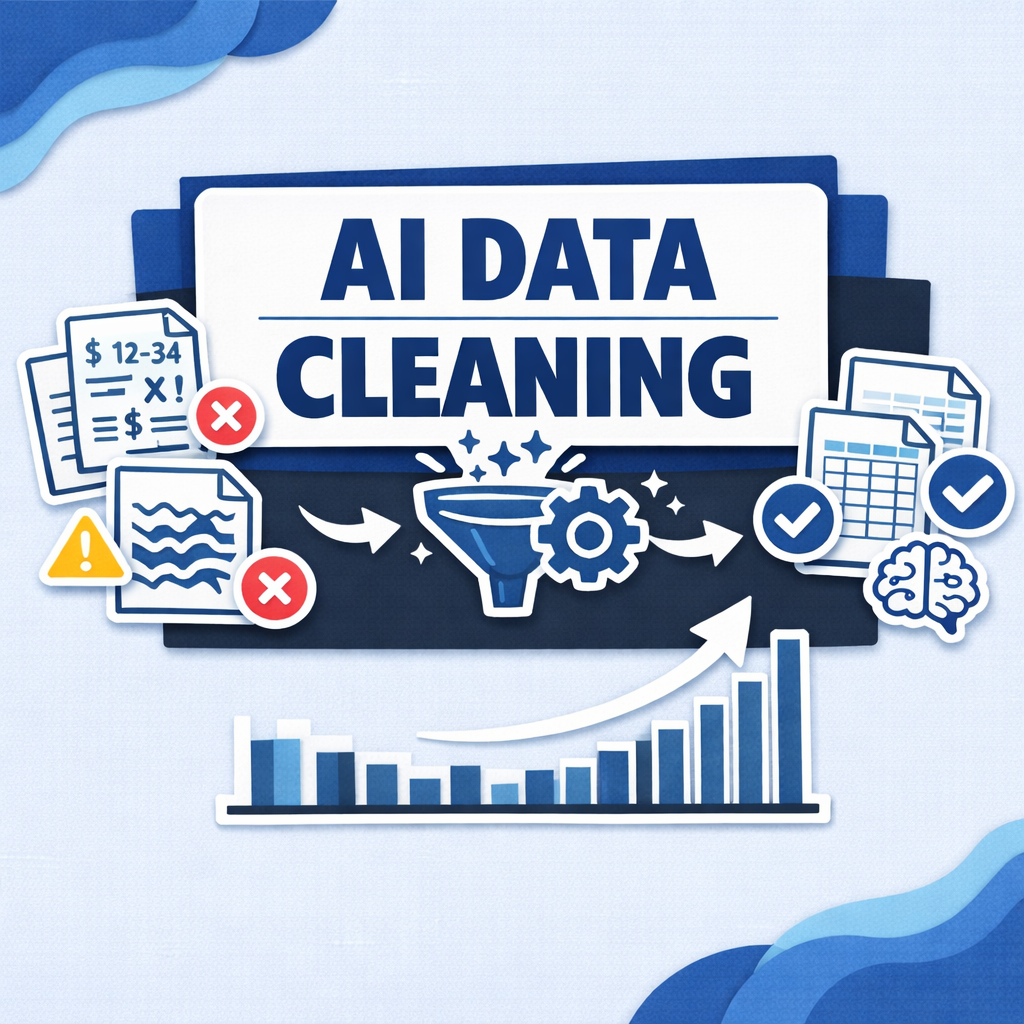
Learn how CSV Normalize uses AI data cleaning and smart column mapping to automate data standardization, ensuring perfectly structured data for your business.
If you work with data, you know the scene. You are about to import a critical CSV file into your system, ready for analysis or a crucial report. Then you open it. Dates are in three different formats, product names have inconsistent spellings, and column headers are a chaotic mix of abbreviations and full names.
Sound familiar?
You are staring down the barrel of another hour, or five, of painstaking manual cleaning.
This messy data problem is universal and it silently destroys productivity. But what if your CSV files could be automatically transformed into perfectly structured data in minutes?
That world already exists, powered by AI data cleaning, smart column mapping, and modern CSV automation tools like CSV Normalize.
The Silent Productivity Killer: Messy CSV Files
Raw CSV files are everywhere, and they are almost never clean.
Common issues include:
- Inconsistent formatting
- Dates:
MM/DD/YYYY,DD-MM-YY,YYYYMMDD - Numbers: commas, decimals, currency symbols
- Text: mixed casing, extra spaces, typos
- Dates:
- Varying column headers
OrderID,Order ID,Order #,Sales_ID
- Structural quirks
- Empty rows, hidden characters, broken delimiters
- Data integrity problems
- Missing values, duplicates, incorrect data types
The result is broken imports, unreliable reports, and wasted hours.
Why Manual Data Cleaning Is No Longer Sustainable
Traditional CSV cleanup usually means:
- Endless Excel formulas and filters
- Custom Python or R scripts that break with every new format
- Copy-paste workflows full of human error
Reality check:
Data teams often spend up to 80% of their time cleaning and preparing data instead of analyzing it.
That leads to:
- Slower insights
- Delayed decisions
- Burned-out talent
- Poor scalability
Manual data preparation simply does not work in a modern, data-driven world.
Unlocking Efficiency with Data Standardization
Data standardization means converting data from multiple sources into one consistent, predefined structure.
Why it matters:
- Improved data quality
- Seamless system integration
- Faster analysis
- More reliable reporting
- Scalable workflows
When every CSV follows the same rules, your data becomes an asset instead of a liability.
Automate Data Cleaning with AI & Smart Column Mapping
Modern CSV automation tools do not just clean data, they understand it.
How AI-powered CSV normalization works:
-
Define your target schema
- Column names
- Data types
- Standard formats such as dates, numbers, and text
-
Smart column mapping
- AI identifies similar columns automatically
- Maps
CustNametoCustomer Name - Works even when headers differ significantly
-
Automated CSV transformation
- Normalize date formats
- Remove currency symbols
- Fix capitalization and whitespace
- Convert encodings, such as CSV to UTF-8
- Validate data against rules
What used to take hours now takes minutes.
Your Next Step to Flawless Data: CSV Normalize
Manual data cleaning is officially outdated.
With CSV Normalize, you can:
- Automate data cleaning
- Use AI-powered smart column mapping
- Reuse normalization rules
- Generate perfectly structured data every time
Stop letting messy CSVs slow your business down.
Conclusion
In today’s data-driven world, speed and accuracy define success.
Manual CSV cleaning wastes time and introduces errors.
AI-powered CSV normalization eliminates both.
By adopting CSV automation, AI data cleaning, and smart column mapping, you unlock:
- Faster insights
- Better decisions
- Scalable workflows
Your data deserves better.
Your time does too.
Frequently Asked Questions (FAQs)
1. What is CSV data normalization?
CSV data normalization is the process of restructuring CSV data into a consistent format by standardizing columns, values, and data types to improve accuracy and usability.
2. How does AI help clean CSV files?
AI identifies patterns, inconsistencies, and errors automatically. It suggests column mappings, fixes formats, corrects typos, and validates data with minimal manual input.
3. Why is data standardization important?
It ensures consistent and reliable data across systems, leading to better analytics, easier integrations, and faster business decisions.
4. Can automated tools handle different CSV formats?
Yes. Advanced tools handle multiple delimiters, encodings like UTF-8 or ANSI, and varying schemas with ease.
5. What is smart column mapping?
Smart column mapping uses AI to automatically match incoming CSV columns to your target schema, even when column names differ.
Ready to transform your data workflow?
Start normalizing your CSVs the smart way with CSV Normalize.